Throughout the years the consequences of fighting in NHL hockey and the true severity of recurrent head trauma have started coming to light. We saw this in two assigned documentaries done by the fifth estate, “The Code” and “Wives reveal”. “The Code” was basically an introduction to the main issues, and the “Wives reveal” was a slightly more in depth look into NGL related deaths and the families experience. It has also come to light that often the players who are responsible for fighting don’t really understand what they’re getting into. These men are also only hired to fight. We also saw a huge internal struggle within the NHL itself, with many people for fighting in hockey and of course the people who were against it. But with the staggering number of serious head trauma and the later repercussions, it’s a wonder why fighting in hockey hasn’t been completely banned all together. Especially considering it has been linked to a number of deaths, including both on the ice and suicide. Personally I picked up on aspects very old school and unhealthy ideas of masculinity in this situation.
Enforcers, tough guys, heavy weights, goons. These are the men expected to fight in the NHL. According to one of the hockey reporters from the documentary “The Code” there are 60 NHL jobs reserved for enforcers, and while they’re definitely physically gifted and athletes in general, they’re not technically hockey players by trade, according to one of the reporters interviewed in “The Code”. Or sometimes they accept those positions in the league because they know it’s the only way for them to get into and stay in the NHL. This continuous fighting for so many of these players have resulted in multiple sever concussions. Shockingly enough most of which are undocumented, as was the case with former enforcer Wade Belak . Injuries such as these can lead to other more serious issues. The most common and the biggest issue being CTE; Chronic Traumatic Encephalopathy, which is caused by recurrent head trauma, such as the concussions many NHL players suffer from. It results in symptoms such as mental health issues (anxiety, depression, memory loss, bursts of confusion) substance abuse and even suicide which was sadly the case with Wade Belak (pictured below)

But where do those ideas of old school masculinity come in though as mentioned beforehand? I for one saw a lot of it when they further discussed the effects of CTE in the “Wives Reveal” documentary by The Fifth Estate. There is and has always been a stigma around mental health in general. However there’s an incredibly huge stigma around mental health in men because its seen as weak, soft and not at all masculine. Which heavily ties into the ideas of toxic masculinity because it all about being seen as strong, independent, and stoic, with common ideas such as the bro code, and that athleticism is very important, which is why a lot of athletes suffer from being put into the “max box”. Which was further discussed in the documentaries we watched in class and class discussions. Because the main symptoms of CTE are mental health issues it’s no wonder nobody wants to officially dress it even when it’s (unofficially) leading to a rising number of deaths in NHL players. The players obviously dont want to be seen as weak, and with the sport being such a huge industry the people behind everything dont want to let on the players are having difficulties for fear of loosing money.
On that note, money and the economic part of the NHL bring a whole other aspect of toxic masculinity into the argument, and really engrains it in all parts of the industry instead of just with the players. Earlier in the semester our class watched another documentary called “The Mask you Live in” there was a lot of in depth explanation as to what toxic masculinity is and what it entails. This documentary touched slightly on economics, and was mentioned again during our in class discussions. Masculinity is often attached to financial success which ties the industry further into the issue and gives us another reason to say the big time wealthy NHL hockey players are victimes of the “man box”.
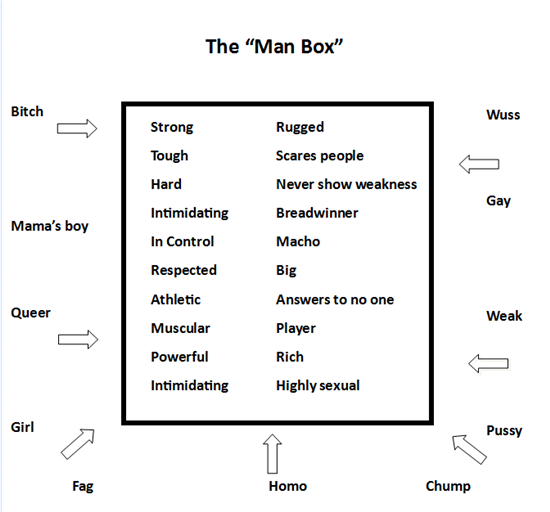
I think another big part of the ideas of masculinity probably comes in the form of “I am big strong man I must fight to prove it” thought process. Which definitely involves fear to some degree and definitely stress which is doubly awful on top the possible mental illness already caused by CTE. According to former enforcer Nick Cypryos he and fellow enforcers alike always experienced a pregame feeling of dread knowing the predicament they’d probably be put in at some point on the ice, even going as far as to say ” you’re fighting for your life a lot of the time.” Hearing Cypryos talk in the Fifth Estate’s “The Code” was eye to opening to the truly damaging about of stress the players are under a lot of the time. Not to mention the fights themselves, Cypryos himself lost his career to injuries sustained from a fight. In other more serious cases such as with Don Sanderson, who died on the ice.


Fighting makes hockey Stereotypically more masculine “Without fighting you just have figure skating on ice” says one of the minor league players. This is another area we can tie into the general theme of masculinity because figure skating is (typically) very feminine and here there’s obviously a need to pull away from that. On top of everything else it seems one of the up and coming issues of fighting in hockey is that it’s becoming a legacy. Despite proof of long term negative effects fighting is becoming a major issue in the minor leagues. Even in children’s games too as seen here in the YouTube video titled “Police Investigating Youth Hockey Brawl” https://www.youtube.com/watch?v=bxNTOqowq3w. Or of course the fight that made national news in 2007, “Ice Hockey – 8 yrs old fighting brawl ice hockey Ontario.” https://www.youtube.com/watch?v=mhZ_PC0CLec. Where teams aged only 8 years old got into a huge fight. They’re taught they need to be strong and violent and stereotypically masculine, this (seen in the videos above) starts at a very young age. Which was an idea also discussed in one of the first readings we had to do in our class “Lovers and Fighters” a memoire written by Carlos Gomez detailing his (near) life long struggle dealing with his idea of his own masculinity.
Unfortunately, despite all of these issues most fans and people within the industry don’t want fighting taken out of hockey. According to former player and then reporter Don Cherry, 70% of people involved are pro fighting. Nick Cypryos himself said that it although it needs to be regulated more it shouldn’t be completely taken out. Personally I think that if the NHL can take responsibility for the impact it has on the players and make sure they know what they’re getting into and have a much better way to regulate fighting they should be free to do whatever they want.

 Lovers an Fighters | Section 21