Violence in the world of hockey

Fighting has been a fundamental part of hockey since its conception. Every team has players who are basically meant to fight, to stand up for their star players. However in recent years, fighting in the game has been getting more and more attention due to the risks that come with it. CBC’s  Bob McKeown has tried to shine some light on the matter in two episodes of “The Fifth Estate”, which were made ten years apart from each other. However, it was the situation in the NHL remained the same.

We will start by looking at the term of masculinity. As Kilmartin mentions it, adventurousness and aggressiveness are considered “manly” terms, in the case of hockey, we look specifically at the aggressive trait, he mentions “Masculinity is characterized by a willingness to take (physical) risks and become violent if necessary”(p 6). This is shown in hockey, where we will see players whose roles are to fight and stand up for teammates, otherwise known as the “enforcers”. This is the guy that is not typically as skilled at the game as their teammates, but will be the first to pick fights. These are the players that will usually become violent when one of their teammates are targeted by the opposing team, instead of having the said player defend themselves, they will be the one standing up for their comrade. Kilmartin then later mentions “[…] bravery is prescribed for men while caution and cowardice are proscribed” (p 6). This essentially describes the role of the enforcers in hockey. Their sole purpose is to fight and stand up for their teammates, without their ability to fight, they will lose their job. They do not have any other choice but to become violent. This is seen in Bob McKeown’s documentary on hockey “Hockey fight: Wives reveal the cost of concussions” where he interviews many former NHL enforcers who shared a similar sentiment towards their role as a player. Fights happen in hockey, as there are players who stand up for teammates.

The next point is at the institutions, meaning our surroundings, the people who surround us. Kilmartin cites “This style involves an orientation toward dominance, competition, and rough-and-tumble play (Maccoby, 1998)” (p 164). From a young age, males are taught to be competitive and to show dominance in order to be seen well. This shows in hockey with fighters. They are showing their dominance facing the player they are fighting or when they deliver crushing hits. They are doing it in the spirit of competition in order to win the game, no matter the consequences. It is their job. They are not to back off from a fight. They will receive backlash if they do. It is their job as a “man” stand up and fight and not to back down.

Here we see that backing down is not seen positively, in this case it would be from a fight.

We can also look at the way that fighting is something that brings more attention to the NHL, therefore bringing in more money to the game. Men are seen as the breadwinners, and for some of the men in the game, fighting is their only way to make a living. Not only are they making a living for themselves, but they are also pawns(the enforcers) to the the king (the NHL) since they are what’s attracting audience.

In conclusion, fighting in hockey is big concern and needs to be taken more seriously considering the consequences it can cause. Fighting might be caused what the players consider as being “masculine” as well as their surroundings, what they are taught growing up as a child. This can shape someone’s mind into thinking fighting is good. After all, hockey is the only team game where fighting is allowed. How would you feel if basketball or soccer had fights as well?

Works Cited:

Kilmartin, Christopher, and Andrew P. Smiler. “Defining Men’s Studies.” The Masculine Self, Cornwall On Hudson, NY, Sloan Publishing, 2019, pp. 1–7

Kimmel, Michael.“Masculinity.” International Encyclopedia of the Social Sciences. Ed. William A. Darity, Jr. 2nd ed. Vol. 5. Detroit: Macmillan Reference USA, 2008. 1-5. Gale Virtual Reference Library. Web. 9 June 2014. 1-5. Print

Christopher Kilmartin and Andrew P. Smiler. “No Man Is an Island: Men in Relationships.” The Masculine Self, Cornwall On Hudson, NY, Sloan Publishing, 2019, pp. 161–171.

McKeown, Bob. “Hockey fight: Wives reveal the cost of concussions.” cbc.ca  NOV 24, 2019.
Blog 5: Friends

For the first question, “Why are you close to your friend?”, he answered “I enjoy being around them and their presence. I can share secrets that normally I wouldn’t tell to other people, they are someone I can really trust. We have a lot of inside jokes together where basically no one can understand us.”

When I asked him what are things he likes to do together with his best friend, he said he enjoys talking about life in general with them, playing video games, especially League of Legends and Minecraft where they mess around often. They enjoy catching up when they haven’t communicated with each other in a while. They can joke around with a lot of things without having the feeling of getting judged by other people, it feels a lot more natural.

He has never told his friend how much they mean to him, because he says that when you are so close with someone, you don’t really have the need to tell them how you feel about them. The other person also reciprocates those feelings. The bond between the two is really tight.

After interviewing my friend, I realized that lot of his answers were things that were talked about in Kilmartin’s article “No Man is an Island: Men in Relationships”. His best friend was someone that he could joke around a lot with, as was described to be one of the things men enjoyed the most of their best friends in pages 161 and 163 of the article. They enjoy playing video games with each other like most guys do with their friends. His best friend is someone he can really trust, he could tell him things that he would tell to only a select few people.

Blog 4: Man Enough?

When Kimmel states “Institutions accomplish the creation of gender difference and the reproduction of gender order through several gendered processes.” (Masculinity, p. 3), he means that our surroundings shape the mindset of people, wether it be school, our work or even our family. They are the ones who define to us what being “manly” or “feminine” is. Just like shown in the episode of “Man Enough”, men always have to be the one in charge, the dominant one as well as being emotionless to be perceived positively by our surroundings. It was also shown that as time passes, men act more and more violent in many ways without realising it, for example when it was said that young men were saying “I’d hit that”, one of the guys said that he was told that now it’s “I’d smash that”. Being more and more violent is being normalized.

By saying “Masculinities”, he means that masculinity doesn’t only have one definition, it has a lot. It all depends on many things like where we grew up, how we were taught. For example, being a “man” might have a different meaning here in North America than Africa or Asia. In the episode of “Man Enough”, they talk about how men have to do certain things to be viewed as a “man” or else they might be seen negatively, they called it the “man box”. In it were things that were considered to be masculine and men had to do those things to be viewed as a man, though this can vary from the place we come from.

Blog 3: Christopher Gardner Jr. (Inexpresiveness and independence)

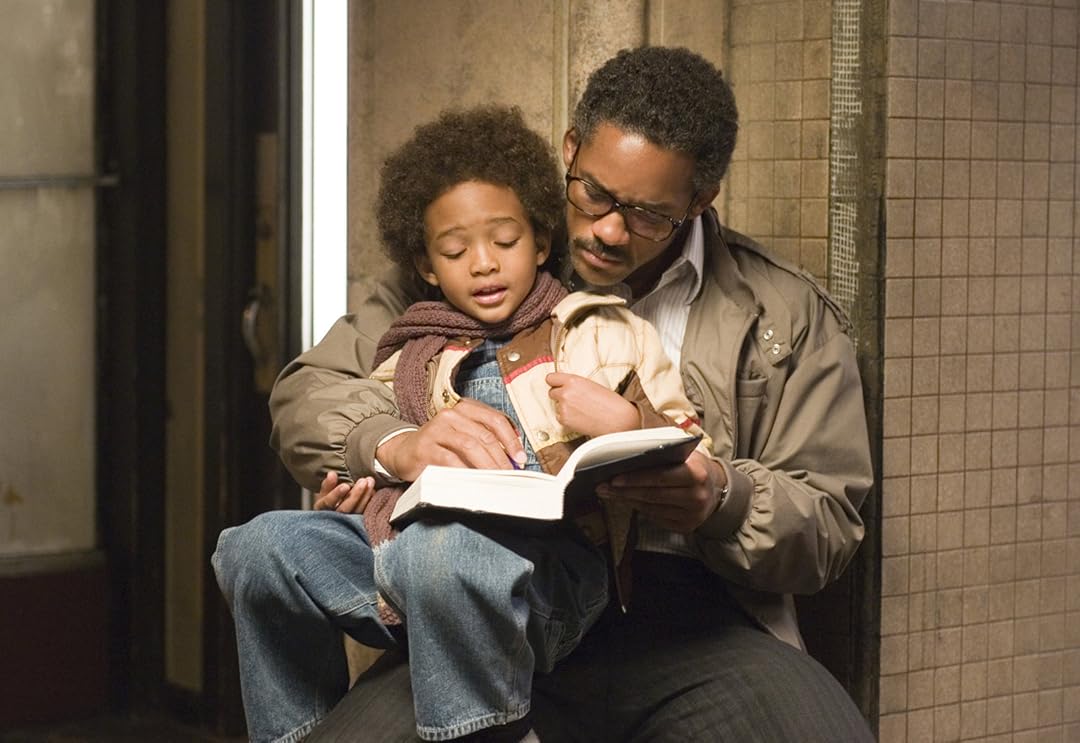
Image result for pursuit of happyness

The male that I chose to write about in this blog post is Christopher Gardner Jr., played by Jaden Smith in the movie “The Pursuit of Happyness”. He plays the son of the main character, Chris Gardner, played by his real life father Will Smith. In the movie, he plays someone who is expressive and dependent, therefore a counter-example for number 3 “inexpressiveness and independent”.

He is someone who is expressive. He isn’t sure what is happening at first when he and his father gets evicted from their home and isn’t afraid to express his concern of what is happening. Throughout the movie, we can see him displaying emotions time and time again, whereas his father is trying to hide his best to hide his emotions, especially from his son. He is sad when they had to find some weird places to live in, like in a bathroom.

He is dependent, because as a child, he has to rely on his parents to raise and care for him. Most of the things that were happening to his father reflected on him as well, like when his father got evicted, he had to follow his dad. He depended on his father to sell his machines for a living.

Blog 2: The Mask You Live In

While watching the movie “The Mask You Live In”, there were a lot of things that stood out to me. The fact that being called things such as “bitch, pussy, wuss or sissy” can really shape the phsychological aspect of a boy, yet it is still a thing that happens. I think the reason it stands out to me is because a lot of men are taught to be more “manly” and if we don’t do so, we get called things that are degrading. I think that after constantly being called things, it really shapes the way we think. If I don’t do such thing I will be seen in a negative way.

Another thing that stood out to me is that we as boys are taught to just deal with our problems, to not speak about it, otherwise we’d be seen as weak. By doing so over and over, we start building up a lot of emotion that go ignored and when we react it comes out in a big burst of emotion such as anger. It stood out to me because, like they say in the movie, when boys lash out, it is often seen as an attitude problem or a conduct disorder. People don’t try to get to the roots of what caused it to happen, which can cause us to stay in our own bubble, isolated with no one to talk to. If we talk about it, it can be used against us at any time.

After reading Carlos Andres Gomez’s book, the fact that he wasn’t sure about his sexuality at one point, but he was acting homophobic in a way. One of the examples is when he almost kissed his best friend when he was sleeping because of a dream was one of the many things that caught my attention. In “The Mask You Live In”, we learn that being homosexual isn’t seen as something being masculin, which is also something the author had to go through as a child. He would be made fun of. The environment he grew up in made him think that liking someone of the same gender is a taboo. It was so bad that he was denying his own sexuality because of it, something that we hear about in the movie. Our environment is a huge factor in our every day life.

Blog 1: Men Who Inspire

When I think of an inspirational man, I think of my grandfather on my dad’s side. I find him to be someone inspirational because he was a very smart man. He was someone that was not scared of doing mistakes, he would take his chances and if he failed, he would try to learn from his mistakes.

He fit into the stereotype we know today, as the man who provided for his family. His family lived in a rural area back in China. He went to the capital, Beijing, to study and stayed there for about a decade, coming back home only a few times a year. There, he studied to be an engineer, but he knew more than just engineering. During his free time, he would take a multitude of classes to expand his knowledge. You could say he had a hunger for learning. It was a “hobby” of his. To me, he was the definition of the saying “we learn something new everyday”. He had a very wide range of knowledge, covering things related to science, history, politics, art, you name it. He would later come to Canada in 1988 in search of a new start. Unfortunately I did not get the chance to know him really well as he died when I was 8, in 2011 at the age of 85.

To me someone who is inspirational is someone who is smart, someone that isn’t scared to make mistakes and wants to learn from them. I also admire someone who knows where they are heading in life.