Final Project: Exploring Masculinity Through Violence in Schools

As far back as I can remember, violence has always been part of our lives. For most of us, it started at school. In fact, we, definitely, all have witnessed someone get bullied or two boys fighting in the schoolyard. Yet, sometimes, it is not just a fight. Irreversible actions can occur, and it is only afterward that we realize the gravity of the situation. Once, a 14-year-old student at Sir Winston Churchill Secondary School, in Hamilton, got stabbed and unfortunately, he died from his injuries. After this kind of incident, we inevitably question the safety of schools. The CBC, alarmed by this incident, did an independent investigation about the issue of violence in Canadian schools and discovered, using a survey, some surprising information and statistics about students.

The CBC first learn that violence between students is not limited to a simple fight. They also face serious types of crimes such as threat with a weapon, hate crime, robbery, extortion, along with physical and sexual assault and more. Yet, the most shocking are the results: “41 per cent of boys say they were physically assaulted at high school.” The fact that there are at least 2 in 5 boys who already have been assaulted demonstrates that there is a serious problem regarding students’ safety. The worst part is that violence is not only limited to that: “26 per cent of girls say they experienced unwanted sexual contact at school and one in four students first experienced sexual harassment or assault before Grade 7.” That being said, we can deduce that schools lack policies to help. In fact, the schools receive several complaints, but it seems like they don’t have the right aid policies for the students. For example, three girls from the school investigated by CBC have been assaulted by the same boy. They complained but the boy got readmitted to school a few days later as if nothing had happened. That proves that schools don’t know how to respond adequately to those type of issues. One of the girls even said that they seem annoyed by this issue. This leads students to remain silent. In fact, “nearly 50 per cent of high school kids don’t report violence they’ve experienced or witnessed.” The students know that the school won’t take any concrete action. At the end, we understand that schools prefer to preserve their reputation rather than releasing critical information about them.

Institutions accomplish the creation of gender difference and the reproduction of gender order through several gendered processes.

Michal Kimmel

Furthermore, the CBC found proof that Canadian students experience from an early age gender-based violence. It tends to focus on bullying for boys and sexual harassment and assault for girls. We understand very quickly that the environment in which young people find themselves greatly affecting their behavior, especially boys, since our society enforce gender differences. Indeed, according to what Michael Kimmel says on page 3 of the text “Masculinity”, “Institutions accomplish the creation of gender difference and the reproduction of gender order through several gendered processes.” We, therefore, understand that some institutions such as schools, workplaces and homes, favor some groups of people over other.

At school, it is a bit different. The male gender tends to be the most affected by gender-based differences since young boys are forced from their young to behave like a “man”. Therefore, by telling a boy to conduct like a “man”, he is asked to reject all female behavior and to realise that if he is not acting like a “man”, he will be rejected by the others. This leads most men to use violence to show their masculinity since for many, violence is equal to masculinity. Indeed, “Violence is often the single most evident marker of manhood” (148), according to Kimmel on the article “Masculinity as Homophobia”. That is why men have tendency to fight and use their strength to resolve their problems. For example, Hockey illustrates perfectly the way men demonstrates their masculinity. They use their fists when it is necessary to settle a misunderstanding just like the students are ready to fight when they get irritated

Moreover, according to the last definition of masculinity proposed by Brannon and David in the text “Defining Men’s Studies”, “Masculinity is characterized by a willingness to take (physical) ricks and become violent if necessary” (6). This explains why there is so much violence in educational establishments. Unwittingly, violence plays a big role in a boy’s life. The society thinks that it is normal for a boy to be violent or aggressive. By trivializing the violent behavior of boys, schools have also banalized violence. Fights are, therefore, not taken seriously. Violence in school is a serious issue and it should be taken much more seriously. All schools should acknowledge it and act accordingly.

Works Cited

CBC News, CBC/Radio Canada, gem.cbc.ca/media/marketplace/season-47/episode-4/38e815a-011d8f47088

McGuire, Jennifer. “Why CBC Started Looking into Violence in Schools | CBC News.” CBC news, CBC/Radio Canada, 8 Nov. 2019, www.cbc.ca/news/canada/school-violence- editors-note-1.5331402

Kilmartin, Christopher, and Andrew P. Smiler. “Defining Men’s Studies.” The Masculine Self, Cornwall On Hudson, NY, Sloan Publishing, 2019, pp. 1–7

Kimmel, Michael. Masculinity as Homophobia. 1994.

Kimmel, Michael. “Masculinity.” International Encyclopedia of the Social Sciences. Ed. William A. Darity, Jr. 2nd ed. Vol. 5. Detroit: Macmillan Reference USA, 2008. 1-5. Gale Virtual Reference Library. Web. 9 June 2014. 1-5. Print.
Blog 5 : Friends

By analyzing my results based on the ideas and theories presented in “No Man Is an Island: Men in Relationships” by Christopher Kilmartin and Andrew P. Smiler, I notice that the person I interviewed has a special relationship with his best friend. When I asked him why he was close to his best friend, he wasn’t very specific, but he simply replied that they “understood each other”. According to him, the fact that they come from the same country makes things much easier since they have a lot in common. Then, when I asked what kinds of things he like to do together, he literally told me “nothing”. He is the kind of person who doesn’t like go out. They only stay home, watching TV, talking to each other and eat. I was kind of surprised when he said that. Usually, guys play video games, go out and talk about sports, but my friend and his best friend just sit on the sofa doing nothing.

One of the researchers in the study described friendships as “part of a performance of masculinity” (Migliaccio, 2009, p. 227). However, if we take the person I interviewed as an example, he and his best friend don’t express any kind of “performance of masculinity”. I only know that they are not really emotional, but competition is not part of their daily.

Lately, when I asked my friend if he has ever told his best friend how much he means to him, he said sans “never” without hesitation. When asked why, he frankly explained to me that “they didn’t have to talk to know that they mean a lot to each other.” I felt like it was obvious to him. He didn’t necessarily have to use words to express his feelings and as long as they could trust each other and have a good time together, that’s all that matters, according to my friend.

This fits perfectly with the qualities one bestows on a best friend according to what is said on page 163 of chapter 8 of the text “No Man Is an Island: Men in Relationships”. In fact, “the quality of a best friend is determined by his ability to be trustworthiness, determined by his ability to respect and keep secrets. I can infer that their relationship mainly provides an emotional intimacy. I doubt that they talk about their feelings, but we can see that they have a connection between them and that they surely share a lot of personal information.

Blog 4 : Man Enough?

First, when Michael Kimmel says “Institutions accomplish the creation of gender difference and the reproduction of gender order through several gendered processes”, he means that our society enforce the difference between men and women. Indeed, we can conclude that certain institutions such as schools, our workplace as well as our home, privilege some groups of people over other. For example, it is more difficult for women to have promotions in their jobs since they will have babies at some point.

Second, Kimmel talks of masculinity in the plural since its interpretation is different in each society and depending on the period. This means that there are many types of masculinity and that it is perceived in different ways in each culture. Indeed, masculinities vary in several aspects. They vary according to different cultures and countries and its meaning also varies over time in the same country. For example, the definition of masculinity in England differs from that in the 1500s to that of today due to several social changes. Likewise, a person’s masculinity changes during their lifetime. An old 60-year-old man probably didn’t have the same definition of masculinity as he did when he was 18. Due to all these factors that change the definition of masculinity, Kimmel prefers to use the term “masculinities” instead of “masculinity”.

Blog 3 : Brannon’s Themes of Contemporary Western Masculinity – Status and Achievement

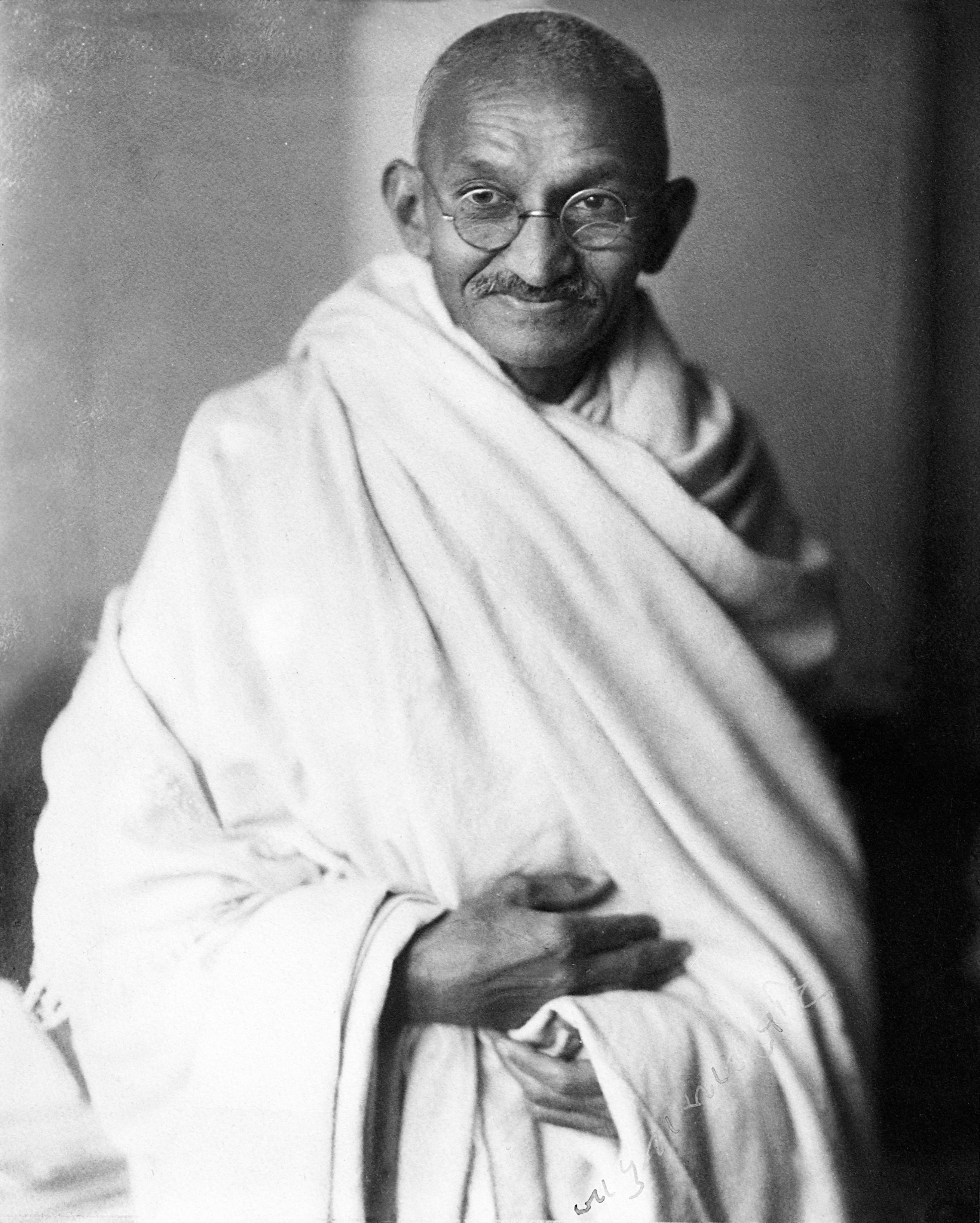
According to Brannon’s definition of masculinity in the theme Status and Achievement: “Men gain status by being successful in all that they do, especially in sports, work, and sexual conquest.” This statement is not necessarily true. There are in this world, several men who have been successful, and who have been able to accomplish extraordinary things, without necessarily respecting the definition proposed by Brannon. Let’s take Gandhi for example. This man totally defies the definition of Masculinity above.

Gandhi is an important spiritual guide of India and of the movement for the independence of this country. Without using any form of violence, this man managed to lead India to independence and Gandhi became successful and accomplished something extraordinary. He was not successful in sports or in his work. He was not recognized for his sexual conquests either. He only became successful after his civil disobedience and this has inspired many civil liberation and defense movements around the world. Because of all of this, I think Gandhi is a good counter example of Brannon’s definition.

Résultat de recherche d'images pour "gandhi"
“There are many causes for which I am ready to die but no cause for which I am ready to kill.”
– Mohandas Karamchand Gandhi

Blog 1 : Men who Inspire

I believe that Barack Obama is an extraordinary man and a perfect example of an inspiring person. He is part of the people who are striving to change the world in order to make it a better place. He shows that even in the face of great adversity, one can always succeed. Obama is a great role model for many. Despite the racism that exists in America, Barack Obama has managed to become the first black president of the United States and become the leader of the most important democracy of the world.

His eight years at the White House have been marked by some great successes, such as the establishment of the Obamacare, the legalization of gay marriage, as well as the reconciliation with Cuba, after more 50 years of diplomatic crisis. In my opinion, Barack Obama is an admirable person. He is empathetic and able to understand the pain of others by putting himself in their shoes and helping them afterwards. In addition, he is a brave man who is not afraid to face obstacles and face all his enemies. Even in the face of failure, he doesn’t give up.

In my opinion, an inspiring person shows a lot courage and can show the world that anything is possible when you really want to accomplish something.

Résultat de recherche d'images pour "barack obama""