Sports in it’s True State

It is a scene all too familiar in sporting events. A star player is hit by the opposing team and the rest of the teammates come to aid with tightly curled fists and a plan to strike. The head injuries, split lips and bruised knuckles, broken bones and busted teeth are all supposedly connected to one common cause: to defend a teammate. “Toxic masculinity” in sports is an opportunity to question the truth behind aggressiveness in hockey and why players feel compelled to engage.

The things that make hockey; and many other sports so interesting are the same things that make it so dangerous; the fights. The drop of a glove is a sign to the opposing player that he’s ready to fight; ready to prove his perseverance and dominance. Protecting your teammates is “the essence of hockey’s unwritten law”(Fifth Estate); a code that means having your teammates back and preparing to fight when they’re in need. In Don Sharey’s words, “ You give a cheap shot to one of our players, you should pay the price. If a guy is down, you don’t hit him…you have to fight with honour.” Does fighting with honour mean giving another player a concussion? Coming from a hockey family, I’ve learned that there’s more to fighting than simply covering for a teammate. Hockey players are drafted for having high levels of speed and stamina, for being strong, big and brave, and some players are solely acknowledged for fighting. According to Kilmartin, “…, most men in the Western world define themselves according to their jobs (Men at Work)”, thus explaining why hockey players like Don Sanderson may feel obliged to fight.Father of Don Sanderson found guilty in historic sex case ...

Similarly to hockey, the coordination, mental determination, speed, courage and incredible core and lower body strength makes figure skating no easy sport to learn. Mostly dominated by women, figure skating is generally associated with being more “feminine” because it requires wearing “girly clothes and accessories”, like sparkly dresses and makeup. Speaking from experience, it’s important to be emotional on the ice. Facial expressions allow the audience to connect to the skater and understand the story he/she is trying to tell. An obvious difference between figure skating and hockey is that there’s no tolerance for violence or they will be suspended from the competition. John Mirasty, NHL hockey player, interprets hockey without fighting as “figure skating on ice”. Kilmartin points out that, “Males are encouraged from an early age to avoid behaviours, interest, and personality traits that are considered “feminine” (Defining Mens Studies)”, hence another probable reason why he’d associate non-violence in hockey with figure skating. 

Chronic Traumatic Encephalopathy (CTE), is a disease caused by repetitive head impacts to the brain, resulting in aggression, depression, memory loss and confusion. Primarily recognized in athletes, CTE can only be diagnosed in an autopsy after death. Jennifer Belak, wife of former NHL hockey player Wade Belak, noticed that the last few seasons of his hockey career was an emotional roller coaster. Some days he was overly excited and happy, other days he was aggressive, angry and sometimes suicidal. On August 31, 201,  Wade committed suicide as a result of CTE. Many men have been taught to “ignore emotions, especially if it is connected to feelings of weakness or powerlessness (Men at Work).” Men who express insecurity are considered “weak”, causing boys to grow up and think that it’s not okay to express weakness and vulnerability; that being why Wade may have felt overwhelmed by his emotions that also strained his relationship with his wife and kids.

To conclude, hockey isn’t just a game, it’s a lifestyle. Every player who laces up their skates has a chance of not coming home to their families. The blood, sweat and tears spilled on their jersey shouldn’t come from a punch to the head, but rather the sacrifice and achievement of a hard working athlete. “Toxic masculinity”continues to grow within male athletes to be stronger, faster and bigger, but they must learn that being the toughest guy in the league means nothing if you don’t have the passion and heart to play the sport.

Wade Belak Found Dead – TheLeafsNation

Works Cited

Christopher Kilmartin and Andrew P. Smiler. “Men at Work: Jobs, Careers and Masculinity.” 

The Masculine Self, Cornwall On Hudson, NY, Sloan Publishing, 2019, pp. 221-226, 228-235.

Kilmartin, Christopher, and Andrew P. Smiler. “Defining Men’s Studies.” The Masculine Self,   

Cornwall On Hudson, NY, Sloan Publishing, 2019, pp. 1–7.       

Concussion Legacy Foundation, “What is CTE?”, Publishing April15 2020. https://concussionfoundation.org/CTE-resources/what-is-CTE

The Fifth Estate, “The Code”, October 30 2017, https://www.cbc.ca/fifth/episodes/2009-2010/the-code 

The Fifth Estate, “Hockey Fights: Wives Reveal the Cost of Concussions”, November 26 2019, https://www.cbc.ca/fifth/episodes/2019-2020/hockey-fight-wives-reveal-the-cost-of-concussions 
Blog 5: Friends

For this specific blog, I chose to interview a man who’s more than a friend, but also a person who finds the pleasure in mocking me and keeping me on my feet; my brother. Growing up, we were very close and had lot’s in common. Now however, we’re more distant and keep our lives private and closed off. So, I decided to interview him about his best friend, and hopefully come to understand a little more about him and his relationships with his bosom buddy.

He answered the first question by telling me that he’s close to his best friend because they’ve spent their childhood growing up together and have experienced life’s challenges hand-in-hand. His best friend knows how to cheer him up when he’s feeling moody and he’s someone who which he confides.

Secondly, they enjoying camping together and going on long bike rides. At the age of 8 years old, they were both enlisted in Boy Scouting where they learned how to put up a tent and survive in the forest. My brother mentioned having so much fun playing basketball with him outside during the summer or just chilling out at his house.

Lastly, him and his best friend aren’t afraid to shelter themselves from their emotions or feel pressured to not be vulnerable or sad. Whenever they separate, they say “love you bro”, not caring what anyone else thinks because “that’s how I truly feel”.

Looking back to the ideas in “No Man Is an Island”, by Christopher Kilmartin, ,my brother hasn’t followed the stereotypical behaviours of how best friends, or men in general, should act around each other. He believes that if you are truly friends with someone, you shouldn’t be afraid to tell them how much they mean to you, especially your best friend.

Blog 4: Man Enough?

Some gendered jobs are rooted in stereotypes and are linked to a persons behaviour or expected role. Michael Kimmel explains that, “Institutions accomplish the creation of gender difference and the reproduction of the gender order through several gender process”, meaning society only accepts what a man or woman “should” act like based on the characteristics of their gender, or in some cases, their ability to see who is more fit to work in that specific institution; whether it be at a public workplace or a job they hold at home. For example, some may think that a man should strive for jobs that are mostly dominated by males, or might have physical characteristics that suit the . Who says that a man can’t work as a nurse or a woman can’t work as a car mechanic? Interestingly enough, society continues to pressurize male and female dominated jobs with less credibility instead of influencing people to choose whichever domain they’d like to pursue in, no matter the gender. The 4th episode discusses how men feel victimized by the pressure of society’s stereotypes and how they feel like they must act a certain way to fit in and be a man.

Is their solely one true definition of masculinity? No, it differs from person to person. A man can be whatever he chooses to be. The same concept applies to women. A woman can choose not to act “feminine”, so does that mean she’s not a woman? When talking about masculinities, we refer to the different ways of being a man. Boys learn “appropriate gender roles” according to expectations of society and the influence of their peers. The documentary mentions how men feel trapped in a box. Inside the man box, their is a list of roles that demonstrate conventional masculinity, which makes them feel forced to be, act and behave exactly like the list of roles presented in the box. Women and men continue to struggle with feeling forced to act perfect. Someday, I hope that society realizes that being a perfect man or woman is just being yourself.

Blog 3: Status & Achievement

In many eyes, a successful man is one who plays sports, someone who’s accomplished in his work, and one who has a successful sexual “conquest”. Although, does society truly believe that this definition solely describes every successful man?

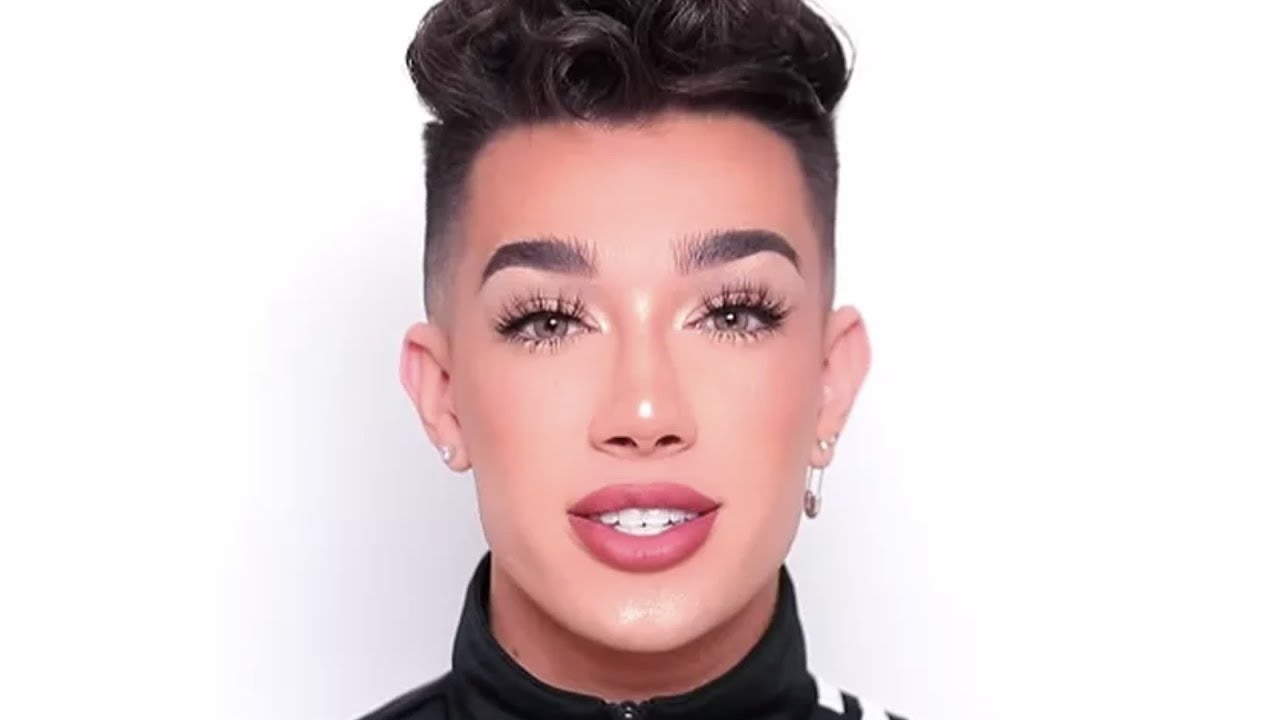
James Charles, make up artist and first ever Coverboy, became an internet sensation at the age of 17, which wasn’t very easy or “fun”, as most people may have thought. This famous youtuber struggled mostly in this traditionally female-dominated industry at the beginning of his career, as there still aren’t that many men in cosmetic corporations. James came out as gay when he was 12 years old, and luckily for him, he has a supportive family who’s accepting and wants to help guide him through his career. He has done makeup for several celebrities like Kim Kardashian and Kylie Jenner.

This successful man didn’t enjoy playing sports in high school or have many “girlfriends”. He received a lot of negative reinforcement online regarding his homosexuality and doesn’t have many manly characteristics based on what society defines a man. Despite not being categorized as a man with a good status achievement based on the definition provided, he has still accomplished so much through his YouTube channel and business.

Blog 1- Men who Inspire by Mikayla Messercola

In my life, I’m fortunate enough to have met a handful of men who’ve inspired me to become the woman I am today. Amongst them, one in particular has influenced me the most; my grandfather. To this day, I looked up to him as my second father and a role model for my family.

My grandfather, who I called Nonno, had the sweetest soul and the nicest heart. He would put everyone’s needs before his own and he’d priortized his family above anything else. This hard working man was born in Italy, and luckily for me, he had taught me how to speak italian and most importantly, I learned so much about my culture and how crucial it was to work hard and set goals for yourself. This hard working man was very family orientated and tried to spend as much time with his grandchildren as possible. My grandfather worked as a tailor in Montreal, and he made hundreds of suits for his clients, including the Priminister of Canada.

In the year 2012, my grandfather was diagnosed with pancreatic cancer. With only a few months to live, he continued to be optimistic and he surrounded himself with family and friends who came to raise his spirits and help him enjoy the final months of his life. With each passing day, he pushed himself to see his grandkids for one more time. On Febuary 3rd 2012, he died in his hospital bed just three days after my birthday.

To me, being an inspirational person doesn’t mean you have to be famous, wealthy or young. Like my grandfather, an inspirational person is someone who inspires you to make a difference, to be a better person and overall, they inspire you to be the best version of yourself.

To my Nonno, you’ll always stay close to my heart. I love you.